
How to Restore Damaged Photos Before Digitising Them

Restoring old, damaged photos can be a challenging task, especially if you want to digitise them. But fear not! In this post, we will share some tips and tricks on how to restore damaged photos before digitising them.

Identify the damage
The first step is to carefully examine the photo and identify any damage. Look for scratches, cracks, tears, stains, or discoloration.

Clean the photo
Before restoring the photo, it’s essential to clean it first. Use a soft-bristled brush or compressed air to remove any dust or debris. If there are stains, use a cotton swab dipped in distilled water to gently wipe the affected area.

Restore the photo digitally
Once the photo is clean, you can begin restoring it digitally. There are many software programs available for photo restoration, such as Adobe Photoshop or GIMP. These programs allow you to remove scratches and stains, adjust brightness and contrast, and even add colour to black and white photos.

Seek professional help
If you’re not comfortable restoring the photo yourself, seek professional help. There are many photo restoration services available that can restore your damaged photos for you. They have the expertise and tools to restore even the most damaged photos.

Digitise the photo
After the photo is restored, it’s time to digitise it. You can use a scanner or a smartphone camera to digitise the photo. If you’re using a scanner, make sure to use a high-resolution setting to capture all the details. If you’re using a smartphone camera, make sure to take the photo in good lighting and at a high resolution.

Restoring damaged photos before digitising them is a crucial step in preserving your family’s memories. With the right tools and techniques, you can restore even the most damaged photos and digitise them for future generations to enjoy.
Preserve Your Family History: How Digitising Your Photos Can Help

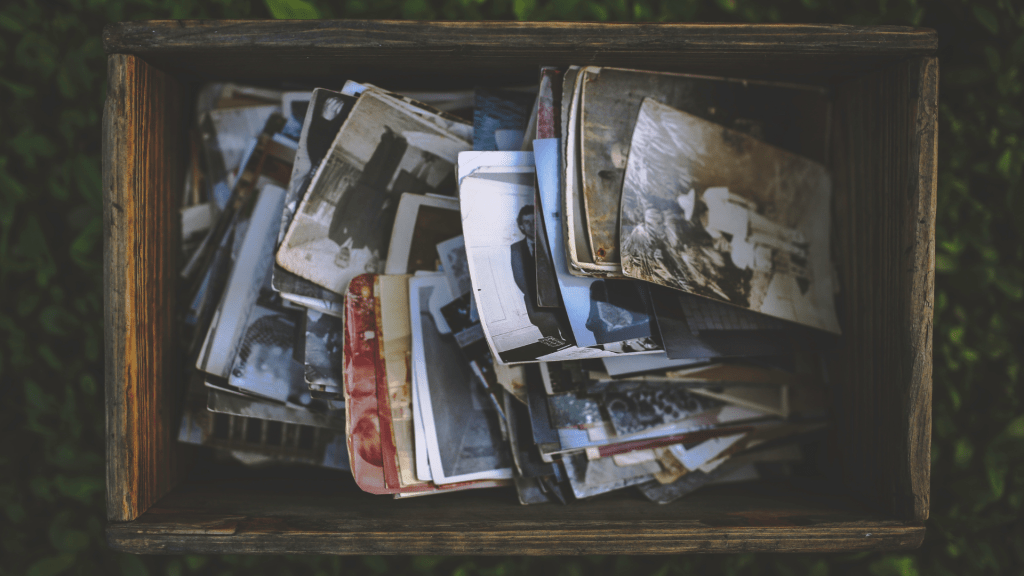
Family photos are precious treasures that hold a lifetime of memories. They are a physical representation of our family history, capturing moments that we can never get back. However, as time passes, photos can deteriorate, fade, or get lost. To preserve your family’s legacy, it is essential to digitise your photos.

Digitising your photos is a process that involves scanning your physical prints and converting them into digital files. It is an excellent way to protect your family’s memories from damage, loss, or decay. There are many reasons why you should consider digitising your photos, and in this blog post, we’ll explore some of the key benefits.

Preserve Your Family’s Legacy

Digitising your photos is an excellent way to preserve your family’s legacy for generations to come. By digitising your photos, you can easily create backups of your files, which means you won’t have to worry about losing your family’s history due to fire, flood, or other natural disasters. With digital files, you can easily share your family’s legacy with your loved ones, no matter where they are in the world.

Save Space and Organize Your Photos

Digitising your photos can also help you save space and organize your collection. Old photo albums and boxes take up a lot of space, but by digitising them, you can store them on your computer, external hard drive, or cloud storage. This means you can access your photos from anywhere, at any time, without having to worry about finding physical space for them.

Enhance and Restore Old Photos

Digitising your photos also provides an opportunity to enhance and restore old photos. Digital software allows you to adjust the colour balance, brightness, and contrast of old photos. You can also remove blemishes, scratches, and other marks that may have appeared over time. By doing so, you can revive your old photos and make them look as good as new.

Preserve Your Photos in Case of Disaster

In the event of a natural disaster, such as a fire or flood, digitised photos will be safe from damage. You can easily create multiple copies of your digital files and store them in different locations to ensure that they are protected.

Easily Share Your Photos with Others

One of the greatest benefits of digitising your photos is the ability to share them with others easily. You can email your digital files, post them on social media, or create a family website where your loved ones can access and view your photos. This makes it easy to share your family’s legacy with your children, grandchildren, and future generations.

Digitising your family photos is a simple and effective way to preserve your family’s history. It allows you to save space, organise your collection, restore old photos, protect them from disaster, and easily share them with others. Don’t wait until it’s too late; digitise your family photos today and ensure that your family’s legacy is preserved for generations to come.

Preserving Your Family’s Military History: How Photo Digitisation Can Help Honour Their Service

Military service has been an essential part of many families’ histories, and preserving the legacy of those who have served is a meaningful way to honour their sacrifice. With the advancements in photo digitisation, it is now easier than ever to preserve the photographs and memories of our loved ones who have served in the military.

Here are some ways photo digitisation can help you preserve your family’s military history:

  1. Creating Digital Copies of Photographs: Most families have a collection of photographs of their military ancestors, but these photos are often fragile and prone to damage over time. By digitising these photos, you can create digital copies that will not deteriorate with age, ensuring that future generations will be able to view and appreciate these cherished memories.
  2. Organising Military Photos: As families grow, so do their collections of photographs. It can be challenging to organise a large number of photos, especially when they span across multiple generations. Digitisation provides an opportunity to organise photos by year, location, or event, making it easier to find and view specific images.
  3. Sharing Military History with Relatives: Sharing military history with relatives is an important way to keep the memory of your loved ones who have served alive. Digitised photos can be shared with relatives across the world, allowing them to appreciate the sacrifices made by their family members.
  4. Honouring Military Ancestors on Special Occasions: Digitised photos can be used to honour military ancestors on special occasions such as Remembrance Day, Memorial Day, or family gatherings. Displaying digitised photographs can help keep the memory of loved ones alive and remind family members of their service and sacrifice.
  5. Enhancing Research and Genealogy: Digitised photos can provide valuable insights for researchers and genealogists. Photos can provide clues about where ancestors served, what they did, and the experiences they had during their time in the military. By digitising photos, you can make them accessible to researchers and genealogists, allowing them to learn more about your family’s military history.

In conclusion, photo digitisation is a powerful tool that can help preserve your family’s military history and honour the sacrifice of your loved ones who have served. By digitising your family’s military photos, you can ensure that their legacy lives on for generations to come.

Reviving Lost Memories: How Photo Restoration Can Help You Reconnect with Your Past

Have you ever stumbled upon a box of old photos that have seen better days? Perhaps they have water damage, are torn or creased, or the colours have faded. These photos may seem beyond repair, but with the right tools and techniques, they can be restored to their former glory. In this blog post, we’ll explore how photo restoration can help you reconnect with your past by bringing lost memories back to life.

Preserving Family Memories

Photos are an important way to preserve our family memories, and they allow us to pass down our family history to future generations. However, over time, these memories can become damaged and deteriorate. Photo restoration is a process that can bring these photos back to life and allow us to once again see the faces and places that are important to us.

The Restoration Process

The restoration process involves repairing and enhancing the damaged photo. This can include repairing tears and creases, removing scratches, and adjusting colour balance and contrast. In some cases, missing parts of the photo can be reconstructed to restore it to its original state. The process is delicate and requires a skilled hand, as well as the right tools and techniques.

Benefits of Photo Restoration

Photo restoration not only allows us to preserve and pass down our family history, but it also provides a sense of connection to our past. By seeing photos of family members who have long since passed away or places that no longer exist, we can connect with our past in a way that is not possible through words alone.

In addition to the emotional benefits, photo restoration can also add value to old photos. Restored photos can be used for a variety of purposes, including creating prints, albums, or digital collections. They can also be used for genealogy research or as part of historical exhibits.

Finding a Professional Restorer

While there are many tools and software available for photo restoration, the best results often come from working with a professional. A professional photo restorer has the experience, knowledge, and tools to bring your photos back to life. They can also provide advice on how to best preserve and display your restored photos.

Photo restoration is a powerful tool for reconnecting with our past and preserving our family history. By restoring old photos, we can see the faces and places that were important to our ancestors and gain a sense of connection to our past. Whether you choose to restore your photos on your own or work with a professional, the end result is well worth the effort.

Bringing Your Family Memories to Life: The Importance of Digitising Your Old Photo Albums

Do you have old photo albums gathering dust in your attic or basement? Maybe they’ve been passed down from generation to generation, filled with cherished family memories that you haven’t seen in years. It’s time to bring those memories back to life by digitising your old photo albums.

At Precious Memories, we understand the importance of preserving family memories for generations to come. That’s why we offer a photo scanning service that takes your old photo albums and turns them into high-quality digital files that you can access and share with ease.

Why should you digitise your old photo albums?

For one, digital files take up less space than physical photo albums, which can be a real lifesaver if you’re short on storage space. Plus, digital files are easier to access and share with family and friends. You can create online albums or slide shows, share photos via email or social media, or simply save them on your computer or in the cloud for safekeeping.

But perhaps most importantly, digitising your old photo albums ensures that your family memories are preserved for generations to come. Old photo albums can deteriorate over time, and without proper preservation, the photos inside can fade, discolour, or even become damaged beyond repair. By digitising your photos, you can ensure that they are preserved for future generations to enjoy.

At Precious Memories, we take great care in handling your family photos. We use state-of-the-art scanning equipment and processes to ensure that your photos are scanned at the highest quality possible. We also offer premium services like photo restoration and colorisation to bring faded or damaged photos back to life.

So if you have old photo albums gathering dust in your home, consider digitising them with Precious Memories. You’ll be preserving your family memories for generations to come, and making it easier to access and share them with family and friends.

Maximising Your Photo Digitisation Results: Choosing the Right Resolution and File Format

Digitising your old photographs can be a rewarding and fulfilling task, but it can also be a daunting one, especially when it comes to choosing the right resolution and file format. These two factors can have a significant impact on the final result of your digitisation project, so it’s important to understand the differences and choose wisely. In this blog post, we’ll explore how to maximise your photo digitisation results by choosing the right resolution and file format.

Resolution

When it comes to digitising your photos, resolution refers to the amount of detail that can be captured in the image. The higher the resolution, the more detail that can be captured. However, higher resolution also means larger file sizes, which can impact storage and processing capabilities. So how do you choose the right resolution for your photo digitisation project?

The answer depends on your intended use for the digitised photos. If you plan to print the photos at a large size or use them for professional purposes, such as in a museum or gallery setting, you’ll want to choose a high resolution, typically 600 DPI (dots per inch) or higher. This will ensure that the details of the original photo are captured accurately and can be seen clearly in the final result.

If, on the other hand, you only plan to view the digitised photos on a screen, such as on a computer or TV, a lower resolution of around 300 DPI may be sufficient. This will still capture enough detail to produce a high-quality image on a screen, but the smaller file size will make it easier to store and share.

File Format

Once you’ve chosen the right resolution for your digitisation project, it’s important to consider the file format. There are several file formats to choose from, including JPEG, TIFF, and RAW, each with its own advantages and disadvantages.

JPEG is a commonly used file format and is suitable for most purposes. It offers good compression, making it ideal for storing and sharing digital photos online. However, JPEG is a lossy format, meaning that it compresses the image data, resulting in a loss of quality. This can be a concern if you plan to use the digitised photos for professional purposes.

TIFF, on the other hand, is a lossless file format, meaning that it retains all the data from the original image. It’s a larger file format, but it offers the highest quality, making it ideal for professional use.

RAW is another lossless file format, but it’s primarily used by professional photographers who want to have full control over the editing process. RAW files are larger than JPEG or TIFF files and require specialised software to view and edit.

In general, for most home photo digitisation projects, JPEG or TIFF are the best file formats to use. If you plan to use the digitised photos for professional purposes, TIFF may be the better option.

Choosing the right resolution and file format for your photo digitisation project is crucial to achieving high-quality results. By understanding the differences and advantages of each option, you can make an informed decision and maximise the potential of your old photos. Remember to consider your intended use for the digitised photos when making your choices, and always keep a backup of your original files to ensure they are protected for future generations.

The Pros and Cons of DIY Photo Digitisation vs. Professional Services

Digitising your old family photos is a great way to preserve and share them with future generations. It allows you to create digital copies that can be easily stored, shared, and edited. But when it comes to photo digitisation, there are two main options: doing it yourself or hiring a professional service. Each option has its own set of advantages and disadvantages. In this blog post, we will explore the pros and cons of both DIY photo digitisation and professional services.

DIY Photo Digitisation

Pros:

  1. Cost: One of the most significant advantages of DIY photo digitisation is cost. Purchasing a scanner or camera and doing the work yourself is typically less expensive than hiring a professional service.
  2. Control: When you digitise photos yourself, you have complete control over the process. You can take your time and ensure that each photo is scanned at the right resolution and colour settings.
  3. Convenience: DIY photo digitisation allows you to work at your own pace and on your own schedule. You don’t have to worry about shipping your photos or scheduling an appointment with a professional service.

Cons

  1. Time-consuming: Digitising photos can be a time-consuming process, especially if you have a large collection. It can take hours, if not days, to scan and edit all of your photos.
  2. Quality: The quality of your digitised photos may not be as high as those done by a professional service. You may not have access to the same high-quality scanners or colour correction software.
  3. Technical knowledge: DIY photo digitisation requires some technical knowledge. You need to know how to use a scanner or camera, as well as photo editing software. Without this knowledge, you may not be able to achieve the best results.

Professional Photo Digitisation Services

Pros

  1. Quality: Professional services typically have access to high-quality scanners and editing software, which can result in better-quality digitised photos.
  2. Expertise: Professional services have the knowledge and experience to digitise photos quickly and efficiently. They know how to handle delicate or damaged photos, ensuring they are digitised safely and with the best results.
  3. Convenience: Using a professional service can be convenient. You can ship your photos to the service or drop them off in person. They will take care of the rest, providing you with high-quality digital copies of your photos.

Cons

  1. Cost: The biggest disadvantage of using a professional service is cost. It can be significantly more expensive than DIY photo digitisation.
  2. Lack of control: When you use a professional service, you have less control over the process. You may not have the final say on colour correction or resolution settings.
  3. Turnaround time: Using a professional service can also mean a longer turnaround time. Depending on the service and the number of photos you need digitised, it can take weeks or even months to receive your digitised photos.

Both DIY photo digitisation and professional services have their own set of advantages and disadvantages. It ultimately depends on your budget, time constraints, and technical knowledge. If you have a small collection of photos and want to save money, DIY photo digitisation may be the best option. But if you have a large collection or want the highest quality digitised photos, it may be worth investing in a professional service. Whatever option you choose, digitising your old family photos is a great way to preserve them for future generations.

Bringing Memories Back to Life: A Customer’s Story

At Precious Memories, we believe that every photo tells a story. That’s why we’re passionate about helping people preserve their memories by digitising old photos that are gathering dust in their attics and basements. We recently had a customer who wanted to digitise an old photo album that had been in her family for generations. Here is her story:

The customer, Mary, had inherited an old photo album from her grandmother. The album was filled with black and white photos of her grandparents, great-grandparents, and other relatives, some of whom she had never even met. Mary knew that the photos were precious and wanted to preserve them for her children and future generations of her family.

Mary searched online for a photo scanning service and came across Precious Memories. She contacted us and arranged to have the photos scanned and digitised. When we received the album, we carefully scanned each photo using state-of-the-art equipment and software. We then colour-corrected and retouched each photo to bring out their full beauty and vibrancy.

When we sent the digital copies of the photos to Mary, she was overjoyed. She had never seen the photos in such great detail and was amazed at how vivid the colours were. Mary was able to share the photos with her family members, some of whom had never seen the old family photos before.

Mary told us that the experience of seeing her family’s history come back to life was priceless. She was grateful that she had decided to digitise the old photo album and was thrilled with the quality of the scans and the restoration work. Mary also appreciated the care and attention that we put into the scanning and digitising process, knowing that the photos were in good hands.

At Precious Memories, we take pride in our work and are committed to helping our customers preserve their precious memories. Contact us today to learn more about our photo scanning and digitising services and how we can help bring your family’s memories back to life.

5 Tips for Organising and Preserving Your Family Photos

Do you have boxes of old family photos stored away in your home, but aren’t quite sure what to do with them? Preserving family memories can be a daunting task, but with a few simple tips, you can organize and preserve your family photos for generations to come. Sort and organize your photos: The first…

How to Share Your Digitised Photos with Family and Friends

Digitising your old family photos is a great way to preserve your precious memories. But what’s the point of digitising your photos if you can’t share them with your loved ones? In this blog post, we’ll discuss some creative ways to share your digitised photos with family and friends. Social Media One of the easiest…

5 Tips for Organising Your Digital Photo Collection

In today’s digital age, we take more photos than ever before. With smartphones in our pockets, it’s easy to capture every moment of our lives. However, with this convenience comes the challenge of managing and organising our growing digital photo collections. If you’re struggling to keep your digital photos organised, we have five tips to…